



If you've been reading about weight management medication lately, you've probably noticed how quickly the picture has changed. There are now several treatments in regular use, a newer tablet option recently approved, and a fair amount of noise online about which is "best." This page is here to cut through that — a clear, side-by-side look at the options your clinician might discuss with you, and what they actually mean in day-to-day life.
A few words before we start. This isn't a promotional page, and it isn't a recommendation. Every medication mentioned here is a prescription-only medicine, which means it can only be supplied after a proper clinical assessment. The right treatment for you isn't decided by a trial average or by whichever option is in the headlines — it's decided by a conversation with your clinician about your individual circumstances. Think of this as background reading to make that conversation a more informed one.
What's available now
A handful of medications are most relevant for adults today.
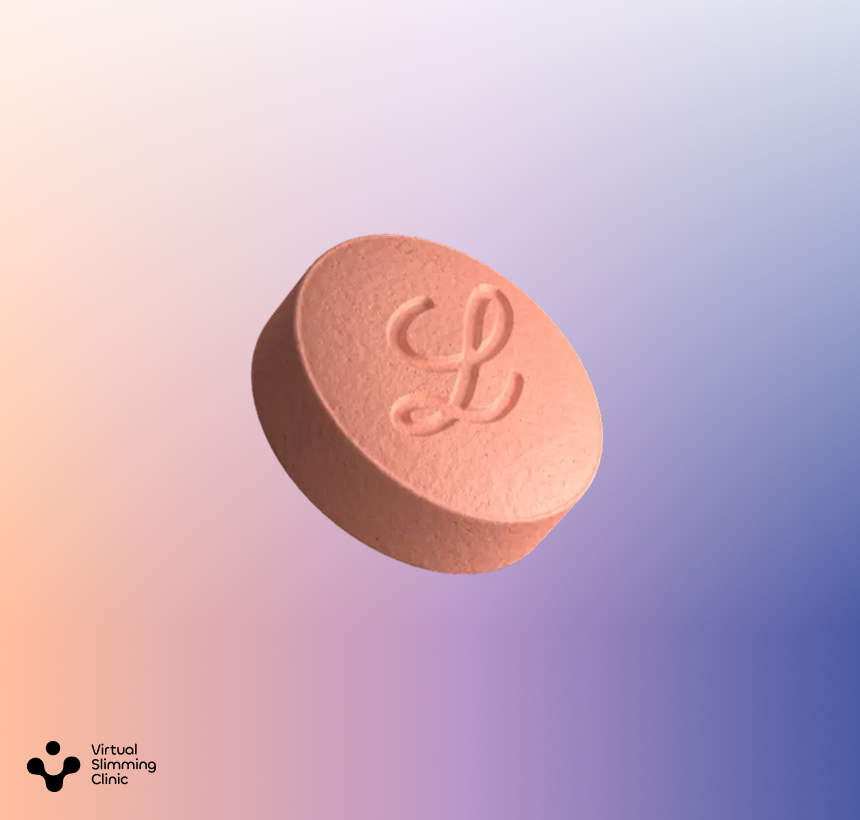
There's semaglutide, available both as a weekly injection (Wegovy) and, more recently, as a daily tablet (the Wegovy pill, approved in June 2026 with a wider launch expected later in the year). There's tirzepatide (Mounjaro), a weekly injection. And there's liraglutide, one of the earlier options, given as a daily injection — available both as Saxenda and, as a generic, as Nevolat. Mysimba, a tablet, also remains in occasional use.
A quick word on that last point, because it's a common source of confusion. Saxenda and Nevolat are the same medicine — both are liraglutide 3.0 mg, taken the same way, with the same evidence behind them (Zentiva, 2025; electronic Medicines Compendium, no date). Nevolat is simply a generic version. So when you see them listed separately, it isn't four or five fundamentally different drugs — it's really three active ingredients, with liraglutide available under more than one name.
How they compare at a glance
Average weight change in clinical trials is discussed below rather than in this table, because an average is not what any one person should expect — and it's too important a point to reduce to a single cell.
How these medications actually work
Most of these treatments work in a similar way. They mimic a hormone your gut releases after eating, called GLP-1. That hormone does a few things: it slows how quickly your stomach empties, it signals to your brain that you've had enough, and it helps your body manage blood sugar. The result, for most people, is a genuine reduction in appetite — feeling satisfied with less, and thinking about food less often (Wilding et al., 2021).
Liraglutide works on this same pathway. It's a close analogue of the natural hormone, and the way it reduces weight is mainly through loss of fat — with a relatively greater reduction in the visceral fat around the organs than in the fat beneath the skin (Zentiva, 2025).
Mounjaro works on that same GLP-1 pathway but adds a second one, a hormone called GIP. In trials, that dual action has tended to produce greater weight reduction, though — and this matters — individual response still varies a great deal (Jastreboff et al., 2022).
One thing worth clearing up: these are not the appetite suppressants of years gone by. They don't work by stimulating the nervous system or altering mood. They work on the natural gut-to-brain signalling that governs hunger. That's also why their side effects are mostly digestive rather than psychological.
What the trial evidence shows
It's worth being honest about what trial data is and isn't. The headline figures you'll have seen come from large studies, measured over fixed periods, alongside diet and activity changes:
In their pivotal trials, weekly semaglutide was associated with around 15% average weight reduction at 68 weeks (Wilding et al., 2021), the semaglutide tablet around 13–14% at 64 weeks, tirzepatide around 20% at 72 weeks (Jastreboff et al., 2022), and liraglutide around 8% at 56 weeks (Pi-Sunyer et al., 2015) — each compared with a small reduction on placebo.
Here's the part that gets lost in the headlines. These are averages. Within every one of those trials there were strong responders, partial responders, and people who didn't respond much at all. The figures also reflect treatment taken alongside real lifestyle change — not medication on its own. And what happens to weight after treatment stops is a separate question entirely.
There's a related point on liraglutide that's genuinely useful to know. Its licence includes a clear early checkpoint: if a person hasn't lost at least 5% of their body weight after 12 weeks on the full dose, treatment should be stopped and reconsidered (Zentiva, 2025). That isn't a failure — it's good prescribing. It reflects something true of all these medicines: response is individual, and a treatment that isn't working for you should be reviewed rather than continued indefinitely.
A trial average is not a promise of your personal outcome. It's a useful guide for a conversation, nothing more.
Side effects — broadly similar across the group
Because most of these work in the same way, their side effects look broadly alike. The common ones are digestive: nausea (most noticeable when the dose is first increased), an unsettled stomach, changes in bowel habit, tiredness, and a reduced appetite that can occasionally feel like too much of a good thing. For most people these are most pronounced in the early weeks and settle as the body adjusts (Zentiva, 2025).
Less common, but more serious, are effects such as inflammation of the pancreas, gallbladder problems (which can be more likely when weight is lost quickly), an increase in heart rate, and — in people with diabetes — changes affecting the eyes. Your clinician will talk you through what to watch for, and these are covered in full in each medicine's patient information leaflet.
If you ever experience a side effect from a prescribed medication, you can report it through the MHRA's Yellow Card scheme at yellowcard.mhra.gov.uk. It's quick, and it helps keep medicines safe for everyone (Medicines and Healthcare products Regulatory Agency, no date).
What daily life actually looks like
This is the part people often find most useful, because it's rarely about the medicine itself — it's about how it fits your week.
The weekly injections (Wegovy injection and Mounjaro). One injection a week, on the same day each time. Most people are comfortable with self-administration within a dose or two. They need refrigerating, so a cool bag is worth having for travel. Some people find the weekly routine a helpful marker of progress; others would rather not have a fixed ritual. Missed doses tend to be rare simply because it's once a week.
The daily tablet (Wegovy pill). Taken first thing, on an empty stomach, with plain water — then a wait of around half an hour before food, coffee, or other tablets, and an overnight fast beforehand. No refrigeration, which makes travel simpler. The trade-off is that it asks more of your daily routine: taken incorrectly, it works less well. It suits people whose mornings can reliably accommodate it.
The daily injection (liraglutide — Saxenda or Nevolat). A once-daily injection. The dose is built up gradually over the first few weeks to help your stomach settle, and it can be taken at any time of day, with or without food — though most people find it easiest to keep to roughly the same time (Zentiva, 2025). The daily rhythm means any side effects can feel more constant in the early weeks rather than easing between doses. Liraglutide has been somewhat overtaken by the higher-dose weekly options, but it remains the right choice for some people — and the availability of a generic (Nevolat) alongside the originator (Saxenda) can matter for access and cost.
The honest summary is that the "best" option is often the one that fits your life well enough that you can take it properly and consistently. A brilliant medication taken inconsistently rarely beats a good one taken well.
What shouldn't drive the decision
A few things tend to weigh on people's minds that are worth putting in their place.
Price. Cost matters for affordability — of course it does, and a generic like Nevolat exists partly to help with exactly that. But cheaper doesn't mean worse, and dearer doesn't mean better. Price is a practical consideration, not a clinical one.
What everyone's talking about. A medication being in the news, or being the one a friend is on, tells you it's newsworthy or popular — not that it's right for you. Those are different things.
The headline number. "20% on this one, 14% on that one" is one factor among many. Tolerance, routine, other health conditions, and how you personally respond all matter more than a few percentage points between trial averages.
Newest isn't automatically best. The tablet is the most recent approval, but recency isn't suitability. The right treatment is the one that fits your clinical picture.
A word on where you get it
Please only ever obtain these medications through regulated clinical practice. Counterfeit and unregulated semaglutide, tirzepatide and liraglutide are a real and growing safety problem — they sit entirely outside MHRA oversight, and there's no way to know what's in them. If a deal looks too good to be true, it is.
The conversation that actually decides it
In proper clinical practice, the decision about which treatment is right for you sits with a clinician, after a full assessment. That assessment looks at your health and history, any other conditions or medications, what's worked and what hasn't for you before, your routine and lifestyle, the practical realities (refrigeration, fasting, whether injections suit you, how much you travel), and what's feasible for you.
Your preferences are genuinely part of that — what matters to you, matters. But the final decision isn't a menu choice. It's a considered match between you and a treatment that fits.
How we approach this at VSC
If you're already in active treatment with us, there's nothing you need to do off the back of this page. Treatment reviews are part of your standard care, and if a different option becomes worth discussing for you, your clinician will raise it directly through the portal. If you have questions in the meantime, the portal is the place — your clinician will pick them up as part of your care.
If you haven't yet started, you're welcome to begin a clinical assessment, and a clinician can talk through whether any treatment is suitable for you.
Important safety information. All treatments discussed here are prescription-only medicines and should only be obtained through regulated clinical practice. Counterfeit and unregulated products carry serious risks and fall outside MHRA oversight. Suspected side effects can be reported via the MHRA Yellow Card scheme at yellowcard.mhra.gov.uk. These medications work best alongside sustained lifestyle change; trial results reflect treatment taken with a reduced-calorie diet and increased activity. Medication alone is not the intervention.
This page reflects the clinical landscape as of 19 June 2026 and will be updated when the semaglutide tablet becomes commercially available, or when any option sees a material change in licensing, access, or evidence.
Clinical reviewer: Mohamed Asghar, Clinical Lead. Last reviewed: 19 June 2026 · Next review: at semaglutide tablet launch or 19 September 2026, whichever is sooner.
References
Aroda, V.R., Rosenstock, J., Terauchi, Y., Altuntas, Y., Lalic, N.M., Morales Villegas, E.C., Jeppesen, O.K., Christiansen, E., Hertz, C.L. and Haluzík, M. (2019) 'PIONEER 1: randomized clinical trial of the efficacy and safety of oral semaglutide monotherapy in patients with type 2 diabetes', Diabetes Care, 42(9), pp. 1724–1732.
electronic Medicines Compendium (no date) Nevolat 6 mg/ml solution for injection in pre-filled pen — Summary of Product Characteristics. Datapharm. Available at: https://www.medicines.org.uk/emc/product/100226/smpc (Accessed: 19 June 2026).
Jastreboff, A.M., Aronne, L.J., Ahmad, N.N., Wharton, S., Connery, L., Alves, B., Kiyosue, A., Zhang, S., Liu, B., Bunck, M.C. and Stefanski, A. (2022) 'Tirzepatide once weekly for the treatment of obesity (SURMOUNT-1)', New England Journal of Medicine, 387(3), pp. 205–216.
Medicines and Healthcare products Regulatory Agency (no date) Yellow Card: reporting suspected side effects to medicines. Available at: https://yellowcard.mhra.gov.uk (Accessed: 19 June 2026).
National Institute for Health and Care Excellence (2025) Overweight and obesity management. NICE guideline NG246. London: NICE. Available at: https://www.nice.org.uk/guidance/ng246 (Accessed: 19 June 2026).
Pi-Sunyer, X., Astrup, A., Fujioka, K., Greenway, F., Halpern, A., Krempf, M., Lau, D.C.W., le Roux, C.W., Violante Ortiz, R., Jensen, C.B. and Wilding, J.P.H. (2015) 'A randomized, controlled trial of 3.0 mg of liraglutide in weight management (SCALE)', New England Journal of Medicine, 373(1), pp. 11–22.
Wilding, J.P.H., Batterham, R.L., Calanna, S., Davies, M., Van Gaal, L.F., Lingvay, I., McGowan, B.M., Rosenstock, J., Tran, M.T.D., Wadden, T.A. and Wharton, S. (2021) 'Once-weekly semaglutide in adults with overweight or obesity (STEP 1)', New England Journal of Medicine, 384(11), pp. 989–1002.
Zentiva (2025) Nevolat 6 mg/ml solution for injection in pre-filled pen — Summary of Product Characteristics. Last updated 29 December 2025. Available at: https://www.medicines.org.uk/emc/product/100226/smpc (Accessed: 19 June 2026).

.jpg)


.jpg)























































































.avif)