
.jpg)


In summary: both are once-daily tablets licensed in the UK for weight management, and both work in the same broad way. The clearest practical difference is how you take them. Orforglipron can be taken at any time of day, with or without food. The Wegovy pill must be taken on an empty stomach, at least 30 minutes before your first food or drink, with no more than 120ml of plain water. They are different molecules with different dose schedules, and they have never been compared against each other in a trial.
This page is factual information for patients who have begun an assessment with us. Which treatment is appropriate for you is a decision for your clinician.
The two at a glance
What each one is
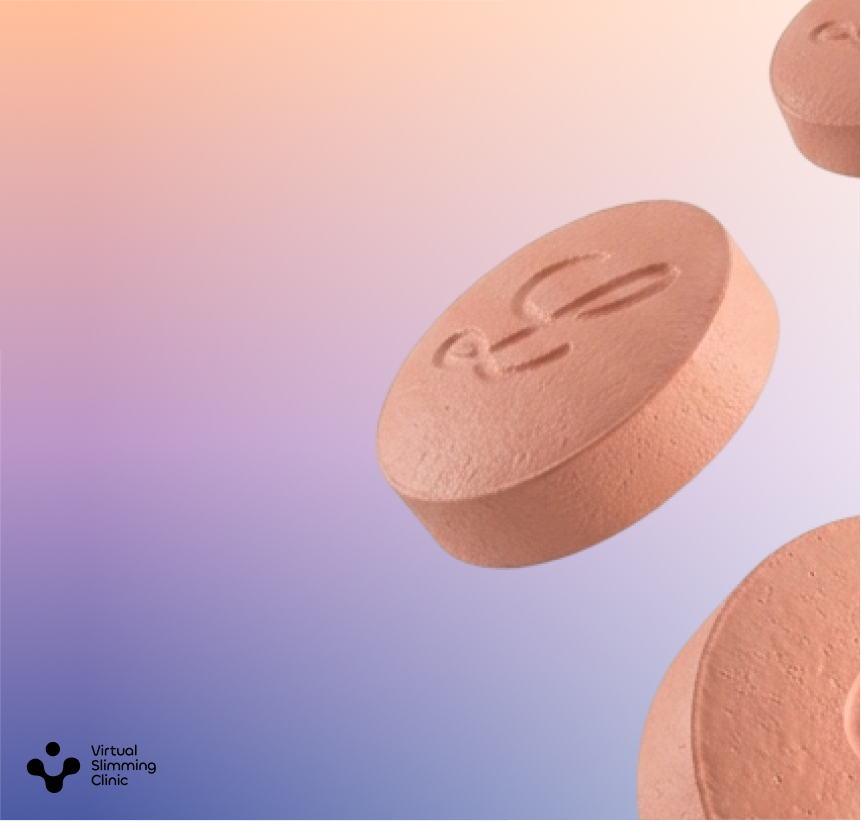
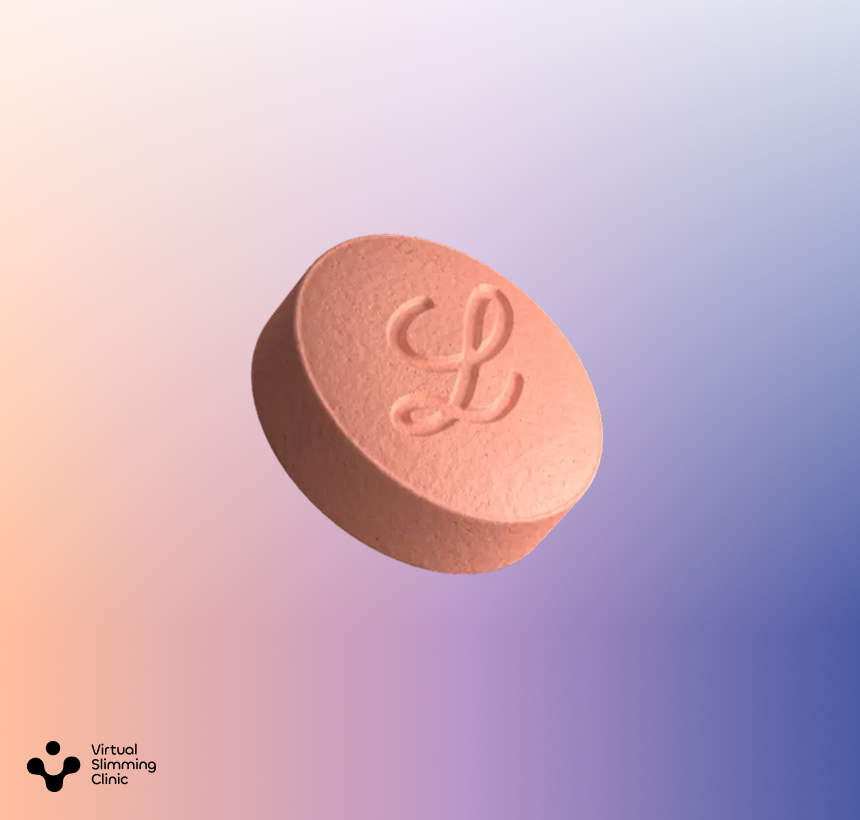
Orforglipron is the active ingredient in Foundayo, made by Eli Lilly. The MHRA authorised it on 10 August 2026, making the UK the first country in Europe to license it (MHRA, 2026a).
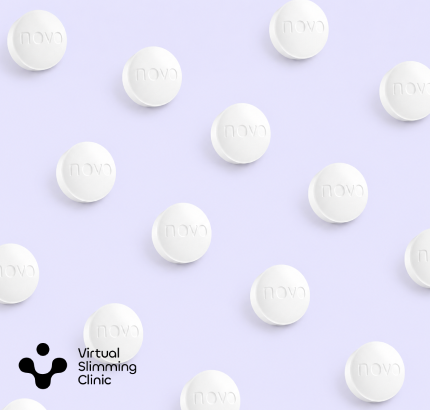
Oral semaglutide is the active ingredient in the Wegovy pill, made by Novo Nordisk, authorised by the MHRA on 11 June 2026 — the first GLP-1 tablet licensed for weight management in the UK (MHRA, 2026d).
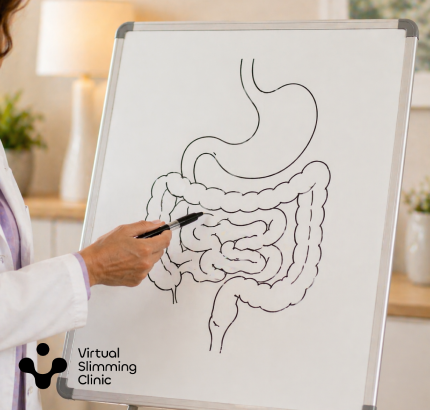
Both are GLP-1 receptor agonists. Both work with a hormone your gut releases naturally after eating, and both act in three ways: quietening appetite signals in the brain, slowing how quickly the stomach empties so smaller portions satisfy, and steadying the glucose response after meals.
The similarity ends at the class. They are different molecules, and that difference explains nearly everything else on this page.
Why one needs an empty stomach and the other doesn't
This is the difference patients notice most, and there is a clear reason for it.
Semaglutide is a peptide. Peptides are broken down by stomach acid and digestive enzymes, which is why most GLP-1 medicines are injected. To make a tablet work, semaglutide is formulated with an absorption enhancer that helps it cross the stomach lining. That process is easily disrupted — taking the tablet with food or other drinks substantially reduces how much is absorbed. Hence the empty stomach, the 30-minute wait, and the 120ml water limit.
Orforglipron is a small molecule, not a peptide. It survives digestion on its own, without an absorption enhancer. That is why it can be taken at any time of day, with or without food, and with no water restrictions (MHRA, 2026a).
This is a difference in chemistry, not in strength. It tells you how each is taken — not how well either works.
How you take them
Orforglipron. Once daily, any time, with or without food. No water restriction.
Dose ladder: 0.8mg, 2.5mg, 5.5mg, 9mg, 14.5mg, 17.2mg — minimum one month at each level (MHRA, 2026a).
Oral semaglutide. One tablet daily on an empty stomach, at least 30 minutes before your first food or drink of the day. Swallow whole with a small sip of plain water, maximum 120ml. Do not split, crush or chew.
Dose ladder: 1.5mg for month one, 4mg for month two, 9mg for month three, 25mg from month four as the maintenance dose.
Both escalate gradually. That is deliberate — digestive side effects are most common when a dose changes, and stepping up slowly is how they are kept manageable. Your clinician may hold you at a dose longer if that is right for you, and not everyone needs the highest dose.
What the trials found — and why you cannot simply compare them
Both have substantial trial evidence. Neither has been compared directly against the other in a head-to-head trial.
Orforglipron — ATTAIN-1. 3,127 adults with obesity, or overweight with a weight-related medical problem, without diabetes. 72 weeks. Average body weight reduction of 7.8%, 9.3% and 12.4% across three dose levels, against 2.1% on placebo. At the highest dose, 59.6% of participants lost at least 10% of their body weight and 39.6% lost at least 15% (Eli Lilly, 2025).
Oral semaglutide — OASIS 4. Adults with overweight or obesity, 64 weeks, 25mg daily against placebo (Wharton et al., 2025). Proportions reaching each milestone at 25mg, against placebo:
Why the headline percentages differ depending on where you read them. OASIS 4 has been reported as both approximately 16.6% and approximately 13.6% average weight reduction. Both are correct — they answer different questions. One estimates the effect among people who took the treatment as directed; the other includes everyone enrolled, whether or not they continued. The second is always the lower figure.
The same applies to ATTAIN-1, which has also been quoted at several different percentages in press coverage.
Which is why the two trials cannot be placed side by side. They ran for different lengths of time — 72 weeks against 64. They enrolled different populations. And unless you know which statistical approach each quoted figure uses, you are not comparing like with like.
If you find a table anywhere ranking these two treatments by percentage, that is what it is doing, and it is not a reliable basis for a decision.
Averages are not predictions. In both trials, individual results varied widely, and a substantial minority did not reach the headline figures.
Side effects
Both are GLP-1 receptor agonists, so the profiles are broadly similar. Most effects are digestive, usually mild, and most noticeable when starting or stepping up a dose.
Commonly reported for both: nausea, diarrhoea, vomiting, constipation, stomach pain. Bloating, heartburn and tiredness are also reported with oral semaglutide.
Less common but serious — seek medical advice promptly with either treatment:
- Severe, persistent stomach pain, particularly spreading to the back — possible pancreatitis
- Gallbladder problems
- Signs of dehydration or kidney problems after ongoing sickness
- Serious allergic reaction — swelling of the face, lips, tongue or throat, or difficulty breathing
- Low blood sugar, more likely alongside other glucose-lowering medicines
One interaction worth knowing about. Oral semaglutide can affect how reliably the oral contraceptive pill is absorbed, particularly early in treatment and around dose changes. If that applies to you, your clinician will discuss what to do — often an additional barrier method for a period, or a non-oral method.
The complete list for each, including uncommon and rare effects, is in its Patient Information Leaflet and Summary of Product Characteristics. Report any suspected side effect through the MHRA Yellow Card scheme (MHRA, 2026c).
Who each is licensed for
Both are licensed for adults with:
- a BMI of 30 or above, or
- a BMI of 27 or above with a weight-related condition — high blood pressure, raised cholesterol, pre-diabetes or type 2 diabetes
Lower thresholds may be considered for some ethnic backgrounds, where health risks can occur earlier. Your clinician accounts for this.
Orforglipron is additionally licensed to improve blood sugar control in adults with insufficiently controlled type 2 diabetes (MHRA, 2026a).
Neither may be suitable if you are pregnant, planning pregnancy or breastfeeding; have a personal or family history of medullary thyroid cancer or MEN 2; have had pancreatitis; or are under 18.
Tell your clinician if you have type 2 diabetes, diabetic eye disease, kidney or gallbladder problems, surgery scheduled, or already take another GLP-1 medicine.
Meeting the BMI criteria does not by itself mean treatment is appropriate. That is what the assessment is for.
Which one is right for me?
That is a clinical decision, and it rests on more than the comparison above. Your clinician will weigh your medical history, existing conditions, other medicines, how you have responded to previous treatment, and whether either is contraindicated for you.
Where the practical difference genuinely matters is fit with your life. A treatment requiring a fasted 30-minute window each morning shapes a routine in a way a treatment you can take with dinner does not.
If you take other medicines first thing, work shifts, or have unpredictable mornings, raise it at your assessment rather than discovering it afterwards. A treatment you can take consistently will do more than one you struggle to take at all — that is a real clinical consideration, not a lesser one.
Frequently asked questions
Which of these is appropriate given my medical history?
That depends on what is in it, and it is the main thing your assessment is for.
Some histories rule both out — a personal or family history of medullary thyroid cancer or MEN 2, previous pancreatitis, pregnancy or breastfeeding. Others don't rule anything out but change how closely you are monitored: type 2 diabetes, diabetic eye disease, kidney or gallbladder problems, or surgery already scheduled.
Where both are clinically appropriate, the decision usually comes down to the practical differences on this page rather than to the medicines themselves.
The most useful thing you can do is give a complete picture, including anything you take that isn't prescribed. Supplements and over-the-counter medicines count, and they are the ones people most often leave out.
How would each fit around the other medicines I take?
This is where the two genuinely differ, and it is worth raising specifically.
Oral semaglutide has to be taken on an empty stomach with a 30-minute gap before anything else — including your other tablets. If you currently take medicines first thing, they will need rearranging around it.
It can also affect how reliably the oral contraceptive pill is absorbed, particularly early in treatment and around dose changes. Where that applies, your clinician will usually suggest an additional barrier method for a period, or a non-oral method.
Orforglipron has no comparable timing restriction, so it does not need to be separated from other medicines in the same way. (Its specific interactions must be confirmed against the SmPC before this page publishes — see the note at the foot.)
For both, tell your clinician if you already take another GLP-1 medicine or anything that lowers blood sugar, as the risk of low blood sugar increases in combination.
What should I expect in the first month?
The first month is the starting dose, and the starting dose is not where the effect is. It exists to let your body adjust.
Most people notice some appetite change within the first few weeks — meals feeling like enough sooner, less interest in snacking. Measurable weight change usually becomes clearer later, typically from around weeks eight to twelve.
Digestive side effects are most likely in these early weeks and again after each step up. Nausea, constipation and loose stools are the common ones. They usually ease as your body adapts.
What helps: eating smaller amounts more slowly, stopping when you feel full rather than finishing the plate, and keeping fluids steady through the day. Fatty and heavily spiced food is the most common trigger.
If you expected more from month one, that is worth knowing in advance — treatment working as intended looks fairly quiet at the start.
How quickly would my dose increase, and what if I don't tolerate a step?
Orforglipron steps up through six levels — 0.8mg, 2.5mg, 5.5mg, 9mg, 14.5mg, 17.2mg — with a minimum of one month at each.
Oral semaglutide steps up through four — 1.5mg, 4mg, 9mg, then 25mg as maintenance from month four.
Those are minimums, not targets. If a step doesn't suit you, your clinician can hold you at your current dose for longer before trying again. That is a normal adjustment, not a setback, and it is often the difference between staying on treatment and stopping.
Not everyone needs the highest dose. Your maintenance dose depends on how you respond, and it is reviewed with your clinical team throughout.
Never increase a dose yourself, and never double up after a missed one.
What happens if it doesn't suit me?
There is a conversation to be had rather than a choice between struggling on and stopping quietly.
Depending on what the problem is, the options usually include holding at your current dose, slowing the escalation, adjusting how and when you take it, addressing the side effect directly, or reviewing whether a different treatment would suit you better.
What we would ask is that you tell us rather than stopping without saying. Side effects are the most common reason people leave treatment early, and most of them are manageable — but a clinician can only help with what they know about.
If treatment isn't right for you at all, that is a legitimate outcome of an assessment rather than a failure of one.
Where the official information lives
The Summary of Product Characteristics and Patient Information Leaflet for each are the definitive sources, published on the MHRA Products website (MHRA, 2026b).
Where anything on this page differs from those documents, those documents are correct.
References
Eli Lilly and Company (2025) Complete ATTAIN-1 results published in The New England Journal of Medicine. Press release, 16 September. Available at: https://lilly.gcs-web.com/news-releases
Medicines and Healthcare products Regulatory Agency (2026a) UK first in Europe to authorise orforglipron for weight management and type 2 diabetes. Press release, 10 August. Available at: https://www.gov.uk/government/news/uk-first-in-europe-to-authorise-orforglipron-for-weight-management-and-type-2-diabetes
Medicines and Healthcare products Regulatory Agency (2026b) MHRA Products website. Available at: https://products.mhra.gov.uk/
Medicines and Healthcare products Regulatory Agency (2026c) Yellow Card scheme. Available at: https://yellowcard.mhra.gov.uk/
Medicines and Healthcare products Regulatory Agency (2026d) First GLP-1 tablet for weight loss approved in the UK. Available at: https://www.gov.uk/government/news/first-glp-1-tablet-for-weight-loss-approved-in-the-uk
National Institute for Health and Care Excellence (2026) Overweight and obesity management, NICE guideline NG246. Available at: https://www.nice.org.uk/guidance/ng246
Wharton, S., Lingvay, I., Bogdanski, P. et al. (2025) 'Oral semaglutide 25 mg in adults with overweight or obesity (OASIS 4)', New England Journal of Medicine, 393(11), pp. 1077–1087. doi:10.1056/NEJMoa2500969

.jpg)




















































































.avif)