.jpg)
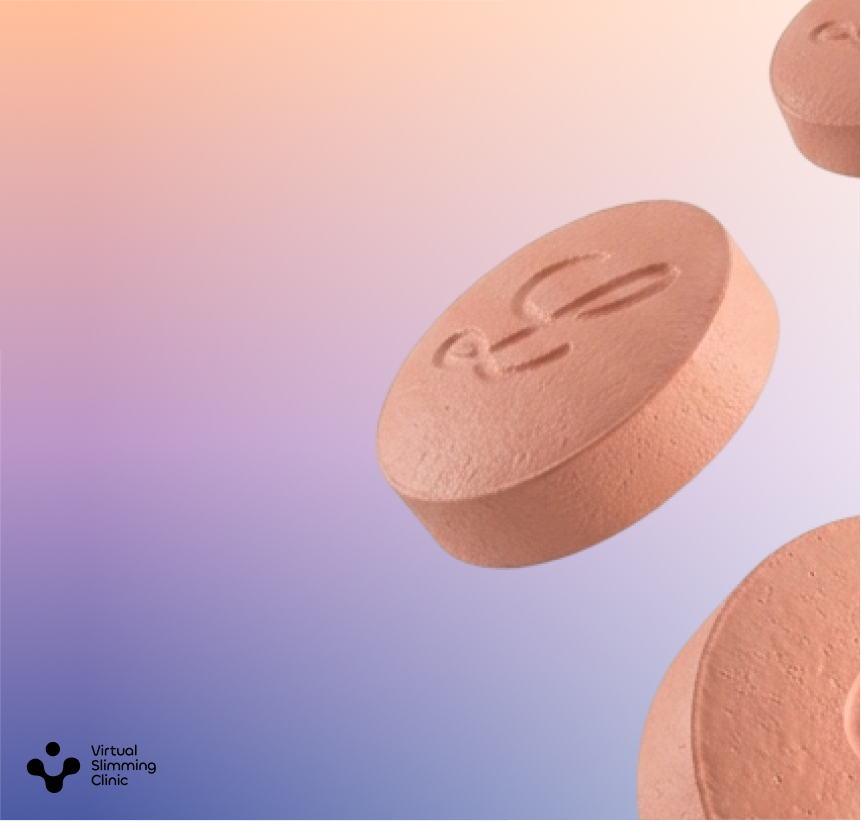


On 10 August 2026, the Medicines and Healthcare products Regulatory Agency (MHRA) authorised orforglipron, marketed as Foundayo, making the UK the first country in Europe to license it.[1][2] It is a once-daily tablet, and it is the second oral GLP-1 receptor agonist licensed in the UK for weight management — following the Wegovy pill in June 2026.
For anyone already taking a weekly injection, or weighing up options before an assessment, the arrival of a second tablet raises a reasonable question: how does this actually compare with what already exists?
This page answers that question across the things that genuinely differ — how each medicine works, how it is taken, how the dose is built up, what the trials measured, and what the safety profile looks like. Every Foundayo-specific fact on this page has been checked against the UK Summary of Product Characteristics (SmPC) published following authorisation.[1] It is written for patients who want the detail rather than the headline.
This is not a promotional page. Every medicine discussed here is a prescription-only medicine. None of them can be supplied without a clinical assessment, and none of them is appropriate for everyone. The information below is provided so that patients engaged in regulated clinical care can have a better-informed conversation with their clinician.
In Summary
- Foundayo is a tablet, taken once daily, at any time of day, with or without food, and with no water restriction.[1] That is the single biggest practical difference from the Wegovy pill, which requires a strict fasting routine.
- It is licensed for both weight loss and weight maintenance, and separately for improving blood glucose control in insufficiently controlled type 2 diabetes.[1] It is the only medicine in this comparison licensed in the UK for both at once.
- It is a non-peptide small molecule. Every other GLP-1 medicine listed here is peptide-based. That chemistry is why it survives the gut without an absorption enhancer or a fasting window.
- In trials, it produced less average weight reduction than tirzepatide or semaglutide at their higher doses. It was not designed to out-perform them; it was designed to be taken without a needle or a fasting routine.
- The dose ladder is long. Six strengths, a minimum of 30 days at each step, so around six months at the earliest to reach the maximum — and not everyone needs to get there.
- Two things about Foundayo catch people out: your licensed maximum may be capped at 9 mg because of another medicine you take, and if you use an oral contraceptive pill, the extra-precaution window applies after every dose increase, not just at the start.[1]
- Not on the NHS. MHRA authorisation and NHS availability are separate processes. A NICE technology appraisal is required, and that has not concluded.
What Foundayo is, and why its chemistry matters
Foundayo is the brand name for orforglipron, an oral high-affinity non-peptide GLP-1 receptor agonist developed by Eli Lilly.[1] It carries a black triangle (▼), meaning it is subject to additional MHRA monitoring as a newly authorised medicine.[1]
GLP-1 is a hormone your gut releases after eating. GLP-1 receptors also exist in the brain regions that regulate appetite, and activating them reduces food intake — an effect mediated by decreased appetite.[1] GLP-1 activity also slows the rate at which the stomach empties, most noticeably after the first dose and diminishing over time, and prompts the pancreas to release insulin in a glucose-dependent way — when blood glucose is raised, not indiscriminately.[1] Every medicine on this page works through that receptor, which is why they share a broadly similar side-effect profile.
The difference is what the molecule is made of.
Semaglutide, tirzepatide and liraglutide are peptides — chains of amino acids. Peptides are, chemically speaking, food. Swallow one and your digestive system breaks it down before it can be absorbed. This is why they were developed as injections, and why the Wegovy pill needs an absorption enhancer (SNAC) to protect a portion of each dose long enough for it to cross the stomach lining.
Orforglipron is a non-peptide small molecule. It is not built from amino acids, so the gut does not treat it as food. It is absorbed without protection, and the SmPC records no clinically relevant food effect on exposure — which is precisely why it can be taken at any time of day, with or without food, with no restriction on water.[1] It is not a marketing convenience. It is a direct consequence of the chemistry. Its elimination half-life of roughly 29 to 49 hours is what makes once-daily dosing work — and, as covered later, it is also why the medicine takes weeks to leave the body after stopping.[1]
One further distinction worth understanding: tirzepatide is not a GLP-1 medicine alone. Mounjaro activates two receptors — GLP-1 and GIP (glucose-dependent insulinotropic polypeptide). That dual action is generally understood to be why it has produced larger average weight reductions in trials than the single-receptor medicines. Comparing tirzepatide with orforglipron is therefore not a like-for-like comparison of the same mechanism at different doses; they are doing different things.
The six treatments at a glance
A note on Ozempic. Ozempic contains semaglutide, the same active ingredient as Wegovy, but in the UK it is licensed only to improve glycaemic control in type 2 diabetes. It is not licensed for weight management. Prescribing it for weight loss is off-label — a decision requiring specific clinical justification and informed consent — and where licensed weight management alternatives exist, it would not ordinarily be the route. It appears in this comparison because patients ask about it, not because it is an equivalent option.
Administration: what taking each one actually involves
This is the category where the differences are largest and most immediately felt, and it is frequently the deciding factor for patients who have already tried something else.
Foundayo
One tablet, once a day, swallowed whole. Any time of day. With food or without. No water restriction. No waiting period afterwards.[1]
Three rules apply. Tablets must not be broken, crushed or chewed. Never more than one tablet a day — the SmPC is explicit that more than one tablet a day should not be taken to achieve the effect of a higher dose, so two lower-strength tablets are not a substitute for one higher strength.[1] And the tablets are light-sensitive: store them in the original blister pack, though no refrigeration or special temperature is needed.[1]
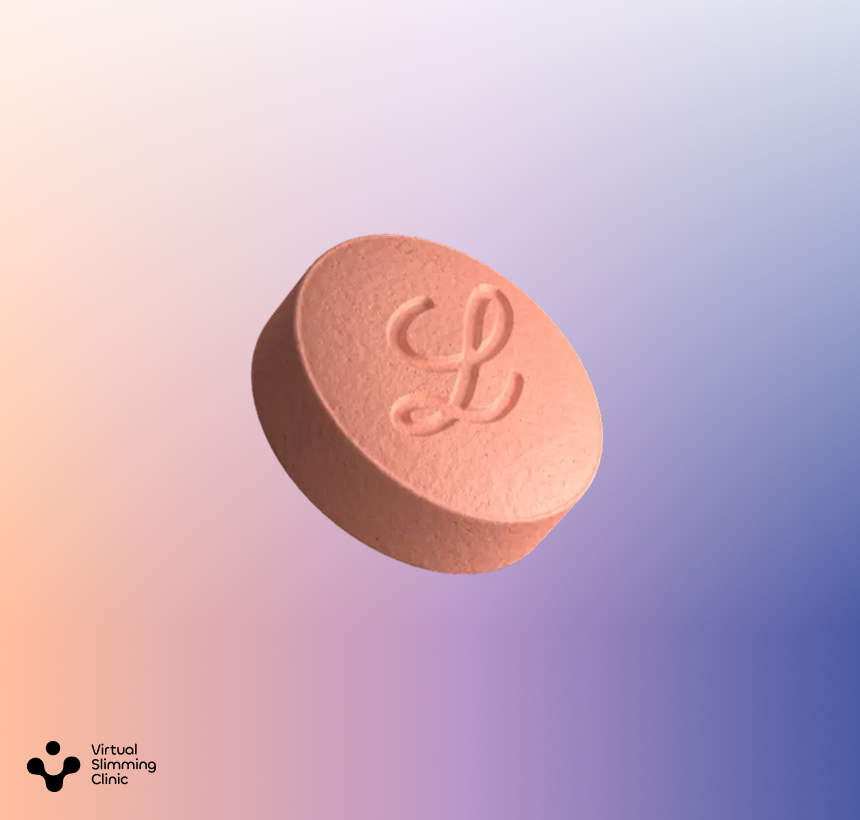
Each strength carries an identifying imprint, G1 through G6, with "Lilly" on the reverse — a simple way to confirm what you have in your hand when the packs look similar and you are stepping up through the ladder.
Wegovy pill
One tablet, once a day, and the conditions are strict:
- An overnight fast of at least eight hours beforehand
- Plain water only when swallowing it — not tea, not coffee, not juice
- At least 30 minutes afterwards before any food, any other drink, or any other oral medication
These conditions are not optional advice. They are how the formulation works. Food, other liquids and other medicines interfere with SNAC-assisted absorption and substantially reduce how much semaglutide reaches the bloodstream. Taken carelessly, the medicine underperforms.
For someone who wakes and drinks coffee immediately, or who takes a thyroid medication first thing, this is a real daily constraint. For someone with a settled morning routine, it is barely noticeable.
The injections
Mounjaro and Wegovy are once-weekly subcutaneous injections into the abdomen, thigh or upper arm, with the site rotated each time. Saxenda is a daily injection — a distinction that surprises people who assume all injectable options are weekly.
All three require refrigerated storage before first use, which adds a practical dimension to travel that the tablets do not have.
The honest framing
Route of administration is not a measure of how good a medicine is. It is a measure of how well it fits a life. A weekly injection asks for one deliberate act every seven days. A daily tablet with a fasting window asks for a protected 30 minutes each morning. A daily tablet with no restrictions asks only that you remember it.
People are not equally good at each of those things, and adherence is not a character trait — it is what happens when a regimen either fits a routine or fights it. That is a legitimate clinical consideration, not a lifestyle preference.
Dosing and escalation compared
Every medicine here starts low and builds up. The purpose is the same in each case: gastrointestinal side effects are most pronounced during dose escalation, and a gradual climb gives the gut time to adapt.
The schedules differ considerably.
The Foundayo ladder in detail
Six strengths, identified on the tablet by imprint G1 to G6:
The SmPC sets out the sequence precisely. The starting dose is 0.8 mg once daily. After at least 30 days, the dose should be increased to 2.5 mg. After at least 30 days on that dose, it can be increased to 5.5 mg. From there, it may be increased to 9 mg, 14.5 mg or 17.2 mg after at least 30 days on the current dose — based on treatment response and tolerability.[1]
Those verbs matter. The first increase is expected. Everything beyond it is a clinical judgement, not a schedule. Thirty days is a floor; many people take longer, and many stop partway up, appropriately.
If a dose is missed: resume as soon as possible, and never take more than one tablet in a day.[1] Do not double up to compensate.
Why "more" is not automatically "better"
This is worth stating plainly, because the instinct to climb to the maximum is strong and often wrong. In ATTAIN-1, average weight reduction rose across the studied doses — and so did the rate of gastrointestinal side effects, and so did the proportion of people who stopped treatment because of them (both shown in the side effects section below).[1] Where the right balance sits is individual. Reaching 17.2 mg is not an objective in itself, and staying at a lower dose is a legitimate clinical decision rather than a failure to progress.
Who does — and does not — need an adjusted dose
A common assumption is that older or heavier patients, or those with kidney problems, need different doses. Per the SmPC, mostly they do not:[1]
- No dose adjustment is required based on age, gender, race or ethnicity, body weight, or kidney function — including end-stage renal disease — or for mild to moderate liver impairment.
- Severe liver impairment: not recommended.
- Under 18: safety and efficacy not established; no data.
- 85 and older: only very limited data.
- Taking a sulphonylurea or insulin for diabetes: Foundayo's dose does not change, but a reduction in the sulphonylurea or insulin dose may be considered to lower hypoglycaemia risk, with blood glucose self-monitoring. Existing metformin and/or SGLT2 inhibitor doses can be continued.
Your maximum may not be 17.2 mg
Orforglipron is a substrate of the CYP3A4 and CYP2J2 enzymes and of the P-gp, OATP1B1 and OATP1B3 transporters.[1] Certain medicines raise orforglipron exposure substantially, so rather than allow the full ladder, the SmPC caps the licensed maximum.
Maximum 9 mg once daily if you take a strong CYP3A4 inhibitor — the SmPC names ketoconazole, clarithromycin and itraconazole (clarithromycin increased orforglipron exposure 3.5-fold) — or a clinical OATP1B inhibitor such as ciclosporin (2.6-fold increase).[1]
Avoid rather than cap: ritonavir and telaprevir inhibit both pathways and should be avoided. Strong CYP3A4 inducers work the other way and cut levels substantially — rifampicin, phenytoin and St John's wort should be avoided, and carbamazepine reduced exposure by 82%, which would largely negate treatment. Moderate inducers (bosentan, efavirenz) may reduce effectiveness; response is monitored and the dose adjusted as needed.[1]
Foundayo also changes how a few other medicines behave:[1]
- Simvastatin — exposure to its active metabolite rose up to 2.5-fold; the simvastatin dose should be halved when taken with orforglipron.
- Rosuvastatin — caution is advised when the rosuvastatin dose exceeds 20 mg.
- Other oral medicines — because orforglipron delays stomach emptying, it can slow the absorption of other tablets. The effect is largest after the very first dose and diminishes over time; no clinically relevant impact on commonly used medicines is expected.
None of the peptide medicines on this page has an interaction profile of this shape — they are not metabolised through these pathways. It is a genuine point of difference and one reason the medication review at assessment matters more here.
Short courses count too. Clarithromycin is a common antibiotic. If a GP or dentist prescribes one part-way through treatment, tell them you are taking Foundayo and tell your prescriber. Do not adjust your own dose — that is a prescribing decision.
What the trials found — and how to read the figures
This section requires some care, because Foundayo's published figures are more easily misread than most.
Two things make the numbers confusing
First: the trial doses are not the tablet strengths. All the phase 3 studies used a hard capsule formulation. The marketed UK product is a film-coated tablet, and the SmPC states plainly that the two are not substitutable on a milligram-per-milligram basis — while confirming that similar efficacy and safety can be expected for tablet and capsule carrying the same identifier imprint.[1] The SmPC publishes the equivalence directly:
So "36 mg produced 12.4%" and "the 17.2 mg equivalent produced 12.4%" describe the same result. If you find 3 mg, 6 mg, 12 mg or 36 mg quoted online, those are capsule doses from the trials, not UK tablet strengths.
Second: different publications report slightly different figures for the same trial, because trials report more than one pre-specified analysis. The figures below are those published in the UK SmPC, which reports results for all participants randomised (the intention-to-treat population).[1] Journal and press coverage of ATTAIN-1 also quotes figures of around 11% under an alternative analytical approach. Neither is wrong; they answer slightly different statistical questions. Where a discrepancy matters to you, the SmPC figure is the one that underpins the UK licence.
ATTAIN-1 — orforglipron in adults without diabetes
ATTAIN-1 was a 72-week double-blind, placebo-controlled study of 3,127 adults with obesity (BMI ≥ 30), or overweight (BMI 27 to <30) with at least one weight-related condition, and without type 2 diabetes. All participants were counselled on a healthy diet and physical activity throughout. Mean baseline BMI was 37.0; mean age 45; 64% were women; 36% had prediabetes.[1]
Only three dose levels were studied, so there is no published efficacy figure for the 0.8 mg, 2.5 mg or 14.5 mg tablets — those are titration or intermediate steps.
Results at week 72 (SmPC, ITT population):[1]
Two readings of that table are worth making explicit. The averages rise with dose — and so does the spread of individual outcomes in both directions: at the top dose, one in five participants reduced their weight by 20% or more, while roughly one in four did not reach 5%. An average is a property of a group, not a prediction for a person.
ATTAIN-2 studied 1,613 adults who also had type 2 diabetes, over the same 72 weeks. Average weight change ranged from −5.5% to −10.5% across the doses, against −2.2% for placebo.[1] Weight reduction is consistently smaller in populations with type 2 diabetes across this entire drug class; this is expected and not specific to orforglipron.
How that sits alongside the others
What this table does not tell you
Read straight down the right-hand column and there is an obvious ranking. That reading is misleading in several specific ways, and it is worth being explicit about them.
These are separate trials, not a head-to-head comparison. Different populations, different baseline weights, different durations, different analytical methods, different years. Cross-trial comparison indicates a general ordering; it does not support a precise one. A difference of one or two percentage points between two separate trials is not a meaningful finding.
Every figure is a group average. As the ATTAIN-1 threshold data above shows, outcomes within a single trial arm span from little change to more than 20% reduction. An average tells you about a population. It does not predict an individual.
Every figure includes diet and physical activity. In each trial, participants received the medication alongside a reduced-calorie diet and increased activity. None of these numbers describes what a medicine does on its own, because none of these trials tested that.
The most effective medicine is the one a person can actually take. A treatment with a higher trial average that is discontinued at week 12 because of side effects, cost or an unworkable routine will not outperform a tolerable treatment continued for two years. Adherence is not a footnote to efficacy — over any real time horizon, it substantially is efficacy.
This is why treatment selection is a clinical conversation rather than a table lookup. Trial data is one input into that conversation. Your medical history, other medications, previous experience of treatment, and what you can realistically sustain are the others.
Beyond the scales: what else the trials measured
Body weight was the primary endpoint, but ATTAIN-1 also recorded changes across cardiometabolic measures at 72 weeks. At the highest dose, alongside placebo-adjusted improvements in triglycerides and cholesterol, participants' waist circumference reduced by an average of 11.1 cm (versus 2.1 cm on placebo), and pooled orforglipron doses lowered systolic blood pressure by an average of 6.14 mmHg versus 0.78 mmHg on placebo.[1] Levels of hsCRP — an inflammation marker — fell by 47.7% at the top dose.[1]
Two further findings are worth knowing:
Body composition. A DEXA sub-study within ATTAIN-1 found that weight reduction was primarily due to a reduction in total fat mass, including visceral fat — the metabolically harmful fat stored around the organs — with greater fat mass loss than lean mass loss.[1] Lean mass still fell, which is one reason protein intake and resistance activity remain part of any well-run programme regardless of which medicine is prescribed.
Prediabetes. Among the 1,128 ATTAIN-1 participants with prediabetes at baseline, 89–91% across the orforglipron doses returned to normal blood glucose by week 72, compared with 42% on placebo.[1]
These are trial-population findings under trial conditions, reported here because they are part of the licensed evidence base — not as a promise of what any individual will experience.
Eligibility
Foundayo is licensed as an adjunct to a reduced-calorie diet and increased physical activity for weight management — including weight loss and weight maintenance — in adults with:[1]
- A BMI of 30 kg/m² or above, or
- A BMI of 27 to under 30 kg/m² with at least one weight-related comorbidity — the SmPC's examples are prediabetes or type 2 diabetes, hypertension, dyslipidaemia, obstructive sleep apnoea, and cardiovascular disease.
Two details are easy to miss. Prediabetes counts as a qualifying comorbidity — many people assume only diagnosed diabetes does. And the licence explicitly covers weight maintenance, not only loss, which matters for anyone thinking about what happens after reaching a goal.
The licensed criteria for the Wegovy pill, Wegovy injection, Mounjaro and Saxenda follow the same BMI structure. Foundayo is additionally licensed for glycaemic control in type 2 diabetes, as covered above.
BMI thresholds may be applied differently for people from some ethnic backgrounds, where cardiometabolic risk occurs at a lower BMI. That is a clinical judgement made at assessment, in line with NICE guidance.[4]
Meeting the BMI criteria does not mean treatment is appropriate. It means an assessment is worth having.
Foundayo and blood sugar: the second licence
Unlike Wegovy or Saxenda, Foundayo carries a second UK indication: improving glycaemic control in adults with insufficiently controlled type 2 diabetes, as monotherapy or in combination with other diabetes medicines.[1] Among the medicines in this comparison, only Mounjaro and Ozempic share a diabetes licence.
In ATTAIN-2 — adults with both obesity or overweight and type 2 diabetes — HbA1c fell by an average of 1.3 to 1.8 percentage points across the doses, versus 0.1 on placebo, and 75% of those on the highest dose reached an HbA1c of 6.5% or below.[1] In the separate ACHIEVE-3 study, orforglipron was compared head-to-head against oral semaglutide at its type 2 diabetes doses (7 mg and 14 mg — the Rybelsus strengths, not the 25 mg Wegovy pill) in patients on metformin, and produced greater HbA1c and body weight reductions at 52 weeks.[1]
If you have type 2 diabetes, this does not make Foundayo the automatic choice — it makes your diabetes care part of the prescribing decision. Any change involving insulin or a sulphonylurea needs planned dose adjustment and glucose self-monitoring, which is exactly the kind of coordination a clinical review exists to handle.[1]
Side effects compared
The side-effect profile across this class is broadly consistent, because the mechanism is broadly shared. Gastrointestinal effects dominate, they are most pronounced during dose escalation, and they settle for most people as the body adapts. In Foundayo's placebo-controlled phase 3 programme, 4,158 patients were exposed to orforglipron, and the most frequently reported adverse reactions were gastrointestinal — mostly mild or moderate.[1]
What the SmPC lists for Foundayo
Very common (more than 1 in 10): nausea, constipation, diarrhoea, vomiting, indigestion, abdominal pain — and hypoglycaemia when used alongside basal insulin.[1]
Common (up to 1 in 10): dizziness, headache, faster heart rate (tachycardia), low blood pressure (hypotension), bloating, belching, acid reflux, flatulence, gallstones, hair loss, fatigue, raised amylase and lipase on blood tests, and hypoglycaemia when used with a sulphonylurea.[1]
Uncommon (up to 1 in 100): acute pancreatitis, altered taste, and dysaesthesia — abnormal skin sensations such as tingling or numbness.[1]
If you have searched for symptoms like headaches, heartburn, feeling lightheaded, a faster heart rate, or numbness in the hands while researching this medicine — those are, respectively, the headache, reflux, dizziness/hypotension, tachycardia and dysaesthesia entries above. They are recognised, listed effects, not anomalies, and each is a reason to speak to your prescriber rather than to guess.
Three of them deserve a line of context:
- Heart rate. Pulse rose by an average of 6.7–8.6 beats per minute at its peak during dose escalation in the weight management studies, settling to 3.9–5.2 bpm above baseline by week 72. Tachycardia was reported by 2.7% of orforglipron patients versus 0.8% on placebo.[1] Independently adjudicated data across the phase 3 programme did not suggest an increase in major cardiovascular events (0.94% versus 1.04% on placebo).[1]
- Hair loss was reported by 3.7% of orforglipron patients versus 1.8% on placebo in the weight management studies; it was transient and associated with the weight reduction itself.[1]
- Low blood pressure occurred more often in patients also taking blood pressure medication — one more reason the medication review matters.[1]
Injectable treatments add injection-site reactions, which the tablets by definition do not have.
The dose trade-off, in numbers
The relationship between dose, benefit and tolerability is visible in the same SmPC dataset, and both sides deserve to be seen together:[1]
Gastrointestinal reactions were mostly mild (61.8%) or moderate (34.3%), with 3.9% severe, and were most frequent during dose escalation, decreasing over time.[1]
Two things are worth noting in that table. The placebo rate of 36.3% is a useful reminder that not every symptom during treatment is caused by the medication. And greater average reduction came with higher rates of both side effects and discontinuation — which is the trade-off a dose review is actually about.
Less common but more serious
Reported with orforglipron, or with medicines of similar structure and activity:[1]
- Acute pancreatitis — persistent, severe abdominal pain, with or without vomiting, needs immediate medical attention. If pancreatitis is suspected, the medicine is stopped; if confirmed, it is not restarted.
- Gallbladder disease, including gallstones — associated with weight reduction itself across this class.
- Dehydration and kidney injury — nausea, vomiting and diarrhoea can lead to fluid depletion, which can harm kidney function. Keeping fluids up during GI symptoms is a genuine safety measure, not generic advice.
- Severe gastrointestinal reactions, including events related to impaired stomach emptying.
- Rare reports across the class of hypersensitivity reactions (anaphylaxis, angioedema) and of NAION, a rare optic nerve condition affecting vision.
Seek urgent medical advice for severe or persistent abdominal pain, persistent vomiting, or signs of an allergic reaction.
Foundayo is under additional monitoring
Foundayo carries a black triangle (▼), meaning the MHRA is actively collecting additional safety data on it. This is standard for newly authorised medicines and is not a warning sign — but it does mean reporting suspected side effects genuinely contributes to the evidence base. Report through the MHRA Yellow Card scheme at yellowcard.mhra.gov.uk or via the Yellow Card app.[1][8]
Cautions: who needs a more careful conversation
The Foundayo SmPC's only absolute contraindication is hypersensitivity to orforglipron or any of the tablet's ingredients.[1] Around that sit a set of specific cautions where prescribing needs extra care — several of which apply across the whole class:[1]
- A history of pancreatitis — not studied; use with caution.
- Severe gastrointestinal disease, including severe gastroparesis — not studied; use with caution.
- Diabetic retinopathy — rapid improvement in glucose control has been associated with temporary worsening; patients with a history of retinopathy should be monitored.
- Severe liver impairment — not recommended.
- Severe heart failure (NYHA class IV) — no experience; not recommended.
- Planned surgery or sedation — GLP-1 medicines delay stomach emptying, and pulmonary aspiration has been reported in patients on long-acting GLP-1 receptor agonists undergoing general anaesthesia or deep sedation. Tell any surgical or anaesthetic team you take Foundayo before a procedure.
- Insulin or sulphonylurea therapy — increased hypoglycaemia risk; doses may need reducing, with glucose self-monitoring, including care while driving.
- Pregnancy and breastfeeding — covered in the next section.
- Under-18s — no data; not established.
Prescribers may also apply wider class-based precautions from the comparator medicines' own product information — a further reason the assessment reviews your full history rather than a checklist.
Contraception and pregnancy — a point specific to Foundayo
This deserves its own section because it differs from the injectables and is easy to miss.
Orforglipron may reduce the effectiveness of oral hormonal contraceptives. The SmPC advises switching to a non-oral method, or adding a barrier method, for 30 days after starting Foundayo and for 30 days after every dose escalation.[1]
Because there are up to five increases on the way to 17.2 mg, that is potentially six separate 30-day windows. It is not a one-off precaution at initiation. Practically: plan the window before the increase rather than after, and if you are stepping up at a reorder, make the connection then.
Pregnancy. Foundayo should not be used during pregnancy. Because of its 29-to-49-hour half-life, the SmPC advises stopping at least three weeks before a planned pregnancy — the medicine takes that long to clear.[1] It should not be used while breastfeeding: animal data showed orforglipron passes into milk at higher concentrations than in blood, and a risk to the infant cannot be excluded.[1] If you become pregnant during treatment, stop and contact your prescriber straight away.
Women of childbearing potential should use effective contraception throughout treatment.[1] The general principle applies across the class — but the dose-escalation window is specific to orforglipron.
Switching between treatments
A frequent question, and the answer is more constrained than most people expect.
There is no dose conversion between an injectable and Foundayo. Your Mounjaro or Wegovy dose does not translate into a Foundayo dose. No published equivalence exists, and the SmPC does not set out a separate starting point for people transferring from an injectable.[1]
The ATTAIN-MAINTAIN trial is relevant context: participants transitioning off tirzepatide or semaglutide did not start at the 0.8 mg initiation dose. They began on a 12 mg investigational capsule — corresponding to the 9 mg marketed tablet — within 14 days of their last injection.[11] That is trial evidence, not established UK prescribing practice, and your starting dose remains a decision for your prescriber based on your treatment history.
Between the Wegovy pill and the Wegovy injection, the active ingredient is the same but the formulations are not interchangeable, and the escalation schedule generally restarts on transition.
Any switch requires a clinical assessment. It is not a like-for-like swap.
Availability, cost and the NHS
Foundayo is not available on the NHS. MHRA authorisation confirms a medicine is safe, effective and of adequate quality. It does not decide whether the NHS funds it. That is a separate NICE technology appraisal, which typically takes 6–12 months following authorisation and has not concluded for orforglipron.[4] The same applies to the Wegovy pill.
At present, access to both tablets is through private prescription following a clinical assessment.
On cost: pricing across this market generally scales with dose, which means the lowest effective dose has a financial dimension as well as a clinical one. That is a reasonable thing to raise at a dose review rather than a reason to under-treat.
A safety note that matters. Do not source any of these medicines from outside regulated UK clinical practice. Counterfeit and unregulated GLP-1 products are an active MHRA safety concern, they are not subject to any regulatory oversight, and their contents are unknown. A medicine bought without a prescription is not a cheaper version of the same thing.
Frequently asked questions
Is Foundayo the same as a "Mounjaro pill"?
No. Mounjaro is tirzepatide, a dual GIP/GLP-1 receptor agonist, and it is available only as a weekly injection. There is no oral form of tirzepatide licensed in the UK. Foundayo is orforglipron — a different molecule, made by the same manufacturer, acting on the GLP-1 receptor only. The term "Mounjaro pill" is a common search phrase, but it does not describe a real product.
Is Foundayo available on the NHS?
Not currently. NHS availability requires a separate NICE technology appraisal, which has not concluded.
How does Foundayo compare to the Wegovy pill?
Both are once-daily tablets licensed for weight management. The practical difference is substantial: the Wegovy pill requires an eight-hour overnight fast, plain water only, and a 30-minute wait before food or other medicines. Foundayo has none of those requirements.[1] On trial figures, the Wegovy pill reported a somewhat higher average reduction — but across different trials, in different populations, which limits how precisely the two can be compared.
Which produces the most weight reduction?
Across published trials, tirzepatide at its higher doses has reported the largest average reductions of any MHRA-licensed weight management medicine. That does not make it the right treatment for any particular individual — it is one input into a clinical decision that also weighs your medical history, other medications, tolerability and what you can sustain.
What dose does everyone start on?
0.8 mg once daily, for at least 30 days, before increasing to 2.5 mg.[1]
Do I have to reach 17.2 mg?
No. Increases beyond the early steps depend on treatment response and tolerability.[1] Not everyone needs to progress to the maximum, and remaining at a lower dose is a legitimate outcome.
Why do I see 36 mg mentioned online?
The phase 3 trials used capsules. The 36 mg capsule has equal effect to the 17.2 mg marketed tablet, and the SmPC states the two forms are not substitutable milligram-for-milligram.[1]
Can I take two smaller tablets instead of one larger one?
No. The SmPC is explicit that more than one tablet a day should not be taken to achieve the effect of a higher dose.[1]
What if I miss a dose?
Resume dosing as soon as possible, and never take more than one tablet in a day.[1] Do not double up. After several missed doses or a prolonged break, contact your prescriber before restarting — there is no published restart schedule, so it should be reviewed individually.
Do I need extra contraception at every dose increase?
If you use oral hormonal contraception, yes — a non-oral or barrier method is advised for 30 days after starting and for 30 days after every dose escalation.[1]
Does Foundayo cause hair loss?
Hair loss was reported by 3.7% of patients in the weight management trials versus 1.8% on placebo. It was transient and associated with the weight reduction itself rather than a direct drug effect, and it is seen across rapid weight loss generally.[1] Adequate protein and a measured rate of loss are the practical responses; persistent shedding is worth raising at review.
Can I take Foundayo with metformin?
Per the SmPC, existing metformin and/or SGLT2 inhibitor doses can be continued when orforglipron is added.[1] Insulin and sulphonylureas are different — those doses may need reducing to avoid low blood sugar, with self-monitoring. Never adjust diabetes medicines without clinical guidance.
Does paracetamol or my other medication still work with it?
Orforglipron slows stomach emptying, which can slow the absorption of other oral medicines — the effect is largest after the very first dose and fades over time, and no clinically relevant impact on commonly used medicines is expected.[1] The exceptions that need active management are listed in the interactions section above: simvastatin (dose halved), rosuvastatin above 20 mg (caution), and the CYP3A4/OATP1B medicines that cap or rule out Foundayo dosing. Always give your prescriber a complete medication list, including short courses and herbal products such as St John's wort.
I have surgery coming up — anything to know?
Yes. GLP-1 medicines delay stomach emptying, and pulmonary aspiration under general anaesthesia or deep sedation has been reported with the class.[1] Tell your surgical and anaesthetic team that you take Foundayo well before the procedure so they can plan around it.
Is Ozempic an alternative for weight loss?
Ozempic is licensed in the UK for type 2 diabetes, not weight management. Where licensed weight management options exist, an off-label option would not ordinarily be the appropriate route. Any off-label prescribing decision requires specific clinical justification and informed consent.
Can I drink alcohol on these treatments?
There is no absolute prohibition, but alcohol can worsen gastrointestinal side effects, affects blood glucose, and contributes calories. Discuss it with your clinician in the context of your own treatment.
Important safety information
Foundayo (orforglipron), Wegovy, Mounjaro, Saxenda and Ozempic are prescription-only medicines. They should not be obtained from any source outside regulated clinical practice.
Foundayo is subject to additional MHRA monitoring (▼). Suspected side effects should be reported through the MHRA Yellow Card scheme at yellowcard.mhra.gov.uk or via the Yellow Card app.[1][8]
The information on this page is general and does not replace advice from a qualified healthcare professional. Your prescriber's directions and the patient information leaflet supplied with your medicine take precedence over anything written here. Never change your dose, skip a titration step, or take additional tablets based on information found online — including this page.
Weight management medication is most effective alongside sustained changes to diet and physical activity. Every trial figure quoted on this page was produced under conditions of medication plus dietary counselling plus increased physical activity.[1] Medication alone is not the intervention.
What happens next
If you are already in treatment with us and want to understand whether a change is appropriate for you, message your clinician through the portal. We will respond as part of standard clinical care — and staying on your current treatment is frequently the right answer.
If you have not started, the first step is an assessment. Our clinical team reviews your full medical history, current medicines, previous treatment experience and goals before any prescribing decision is made. Meeting the BMI criteria does not mean a medicine will be recommended, and it does not determine which one.
References
[1] Foundayo film-coated tablets — Summary of Product Characteristics (United Kingdom). Eli Lilly Nederland B.V. Date of first authorisation: 10 August 2026. PL 14895/0372 (9 mg) and PL 14895/0374 (17.2 mg). Available via the electronic Medicines Compendium (medicines.org.uk/emc). Includes ATTAIN-1, ATTAIN-2 and ACHIEVE-1/-2/-3/-5 data as presented in section 5.1, adverse reaction data in section 4.8, and interaction data in section 4.5.
[2] Medicines and Healthcare products Regulatory Agency. UK first in Europe to authorise orforglipron for weight management and type 2 diabetes. GOV.UK, 10 August 2026.
[3] Wharton S, Aronne LJ, Stefanski A, et al. Orforglipron, an Oral Small-Molecule GLP-1 Receptor Agonist for Obesity Treatment (ATTAIN-1). New England Journal of Medicine. 2025;393(18):1796–1806. doi:10.1056/NEJMoa2511774
[4] National Institute for Health and Care Excellence. NG246: Obesity — identification, assessment and management. Available at: https://www.nice.org.uk/guidance/ng246
[5] OASIS 4 — phase 3 randomised controlled trial of oral semaglutide 25 mg for weight management.
[6] Wilding JPH, Batterham RL, Calanna S, et al. Once-Weekly Semaglutide in Adults with Overweight or Obesity (STEP 1). New England Journal of Medicine. 2021;384:989–1002.
[7] Jastreboff AM, Aronne LJ, Ahmad NN, et al. Tirzepatide Once Weekly for the Treatment of Obesity (SURMOUNT-1). New England Journal of Medicine. 2022;387:205–216.
[8] MHRA Yellow Card Scheme — suspected adverse drug reaction reporting. https://yellowcard.mhra.gov.uk
[9] STEP UP — phase 3 trial of semaglutide 7.2 mg for weight management. [Verify citation and figure against source before publication.]
[10] Pi-Sunyer X, Astrup A, Fujioka K, et al. A Randomized, Controlled Trial of 3.0 mg of Liraglutide in Weight Management (SCALE). New England Journal of Medicine. 2015;373:11–22.
[11] Aronne LJ, Horn DB, le Roux CW, et al. Orforglipron for maintenance of body weight reduction: the double-blind, randomized phase 3b ATTAIN-MAINTAIN trial. Nature Medicine. 2026;32(7):2679–2687. doi:10.1038/s41591-026-04386-7
[12] Committee of Advertising Practice / ASA / MHRA / GPhC. Joint Enforcement Notice: Prescription-only medicines used for weight management. April 2025, updated September 2025.
[13] CAP. AdviceOnline: Weight control — Prescription-only medicines. Updated 20 March 2026.

.jpg)


.jpg)




















































































.avif)