


An orientation guide for anyone curious about the tablet form of semaglutide — including people currently using an injection.
If you've been following developments in weight management, you may have heard that semaglutide — the medicine many people know as a weekly injection — has been approved in a tablet form. It's a development a lot of people are understandably curious about, particularly anyone who has never been keen on the idea of injecting.
Here's the honest position up front: the Wegovy pill has received MHRA approval (Medicines and Healthcare products Regulatory Agency, 2026), but it is not yet available to prescribe or buy. A commercial launch is expected at some point, but the timing isn't confirmed. So this isn't a guide to starting it — it's a plain-English summary of what the tablet is and how it's intended to work, drawn from the manufacturer's guidance, for anyone weighing up their options or wondering whether it might suit them better than an injection when it does arrive.
A quick note before we begin. This is general information, not medical advice, and it doesn't replace a conversation with your clinician or the official Patient Information Leaflet that would come in the box. Semaglutide, in all its forms, is a prescription-only medicine. Nothing here is a recommendation to switch, to start, or to seek out any particular treatment.
What is the Wegovy pill?
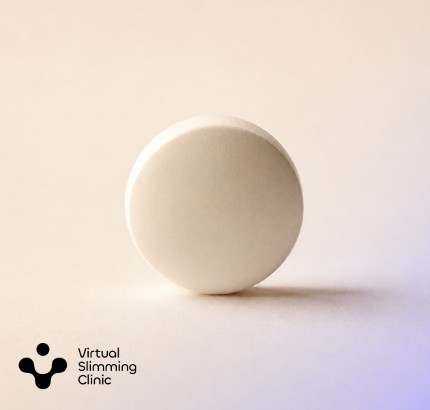
The Wegovy pill is a once-daily tablet form of semaglutide — the same active ingredient as the familiar weekly injection. Semaglutide belongs to a group of medicines called GLP-1 receptor agonists. In everyday terms, it works a bit like a hormone your gut releases after a meal, helping you feel less hungry and eat less (Electronic Medicines Compendium, 2026).
The key thing to understand, if you're comparing it with the injection, is that the tablet isn't a different or weaker medicine. It's the same molecule, simply taken a different way — daily, by mouth, rather than weekly, by injection. What changes is the day-to-day experience of taking it.
How would it fit into your routine?
For a lot of people, the appeal is simple: no injection. Plenty of people prefer the idea of a tablet to injecting themselves, and for some, that preference makes a real difference to how they feel about starting treatment at all.
That said, a tablet isn't automatically the easier choice. As you'll see below, it comes with a daily routine that asks a little more attention than a once-weekly injection. Neither is better in the abstract — it really comes down to what fits your life. Understanding the trade-off now is useful if you're weighing up which might suit you when the tablet becomes available.
How is the Wegovy pill taken?
This is where the tablet differs most from the injection, so it's worth understanding. Here's what the manufacturer's guidance describes (Novo Nordisk, 2026):
The pill is meant to be taken first thing in the morning, on an empty stomach — ideally at least eight hours after you last ate. You take one pill whole, with no more than a small sip of plain water (up to about 120ml). Then you wait around 30 minutes before eating, drinking anything else, or taking any other tablets by mouth. That half-hour gives the body time to absorb the medicine.
A few things the guidance is clear about:
- Swallow it whole — don't split, crush, cut, chew or dissolve it
- Take it with plain water only, not other drinks
- Keep it in its original blister pack until you're ready to take it
- Take it the same way every day — consistency is what makes it work
Because the tablet's effectiveness depends on that empty-stomach routine, it asks for more consistency than a weekly injection does. For some people, a daily morning habit is easier to remember than a weekly one; for others, the morning wait is a genuine consideration. Many people find that taking it as they start their day — while making the bed or getting dressed — makes it easier to remember.
Which dose would be taken?
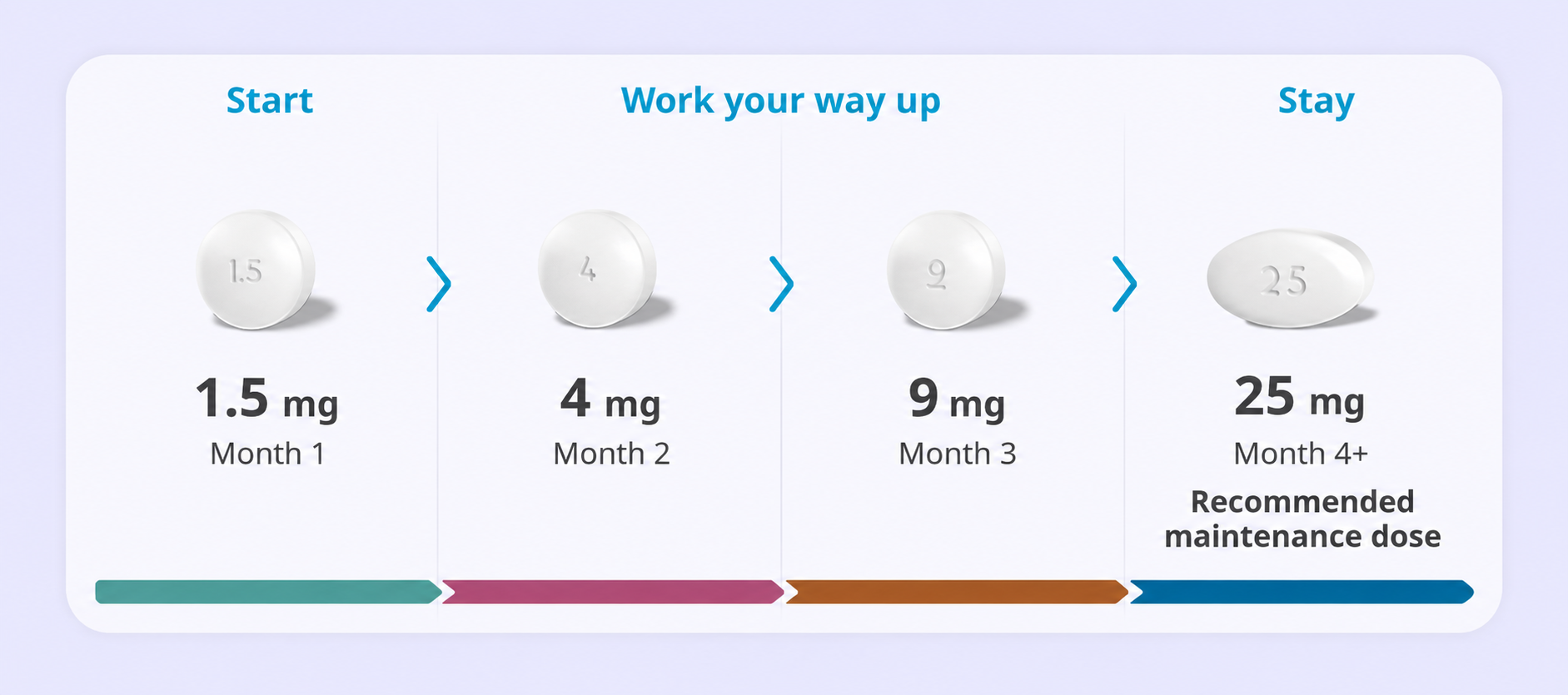
Like the injection, the tablet isn't taken at full strength from the start. The guidance describes a gradual, stepped approach, with the dose increasing roughly month by month so the body can get used to it (Novo Nordisk, 2026):
- Month 1: a starting dose
- Month 2 and 3: stepping up, as tolerated
- Month 4 onwards: the maintenance dose, where the full effect is usually seen
The steps are increased slowly and deliberately to help reduce side effects, and the pace would always be guided by a clinician based on how well each person is getting on. If a dose were ever missed, the guidance is simply to skip it and carry on as usual the next day — not to double up.
What are the possible side effects?
Like all medicines, the Wegovy pill can cause side effects, though not everyone gets them. As with the injection — and with this group of medicines generally — the one most people will have heard about is nausea, or feeling sick. It's described as very common, affecting more than one in ten people (Novo Nordisk, 2026; Electronic Medicines Compendium, 2026). It's usually most noticeable early on, or when the dose goes up, and for most people it eases over time.
Other digestive effects — being sick, diarrhoea or constipation — can happen too. Because these can leave you a bit dehydrated, the guidance stresses drinking enough fluids, which matters especially if you have any kidney problems.
How can nausea be managed?
If you've used an injection before, this part will look familiar — the advice is much the same. The manufacturer suggests a few simple things that help many people (Novo Nordisk, 2026):
If you can, it helps to avoid:
- Hot, fried, greasy or strong-smelling foods
- Eating too quickly
- Drinking a lot while you're eating
Things worth trying:
- Smaller portions
- Foods that contain ginger
- Regular sips of cold drinks
- Eating slowly, and staying upright after meals
Two other things people find useful: keeping your mind busy with something you enjoy, and getting a little fresh air. If nausea were ever persistent or hard to manage, the right step would be to speak to your clinical team rather than struggle on.
What should you watch out for? (Other safety information)
Because this is forward-looking information rather than a treatment you'd be starting today, the points below are for orientation only. If and when the tablet becomes available and you're considering it with a clinician, the full Patient Information Leaflet and a proper assessment would go through everything relevant to you. The guidance flags the following as things to be aware of (Electronic Medicines Compendium, 2026):
Dehydration — because the medicine can cause sickness, vomiting or diarrhoea, staying well hydrated matters, particularly if you have kidney problems.
Inflammation of the pancreas (pancreatitis) — anyone who has ever had pancreatitis should mention it to their clinician. Severe stomach and back pain that won't go away is something to raise promptly.
Diabetes — the medicine is not a substitute for insulin and must never be used as one.
Sudden changes to eyesight — a sudden loss of vision, or rapidly worsening eyesight, would warrant contacting a doctor urgently. A very rare effect on the eye (called NAION) is noted in the leaflet — worth being aware of, not alarmed by.
Low blood sugar (hypoglycaemia) — this is more likely for people who also take insulin or a sulfonylurea for diabetes. Warning signs can come on suddenly and include cold sweat, pale skin, a fast heartbeat, feeling hungry, shaky, sleepy, anxious or confused, or having trouble concentrating.
Diabetic eye disease — for those who have it, rapid improvements in blood sugar can sometimes make it temporarily worse, so any eye problems would be worth flagging.
Delayed stomach emptying (gastroparesis) — for anyone with this condition, the medicine could lead to more pronounced digestive effects, so it's something to discuss with a doctor first.
Other things the guidance covers
Allergies and ingredients — the tablet contains semaglutide, salcaprozate sodium and magnesium stearate. It isn't for anyone allergic to any of these (Electronic Medicines Compendium, 2026).
Other medicines — it's always worth telling your clinician about everything you take. Two are specifically flagged: thyroid medicine (levothyroxine), as your levels may need checking, and blood-thinning medicines such as warfarin, which may need more frequent blood tests (Electronic Medicines Compendium, 2026).
Pregnancy and breastfeeding — the guidance is that it should not be used in pregnancy, that contraception is advised while taking it, and that anyone planning a pregnancy should stop at least two months beforehand. It also shouldn't be used while breastfeeding (Electronic Medicines Compendium, 2026).
Driving and using machines — it's unlikely to affect driving, though some people feel a little dizzy in the first few months. If that happened, the advice would be not to drive or use machinery until it passed.
If you have diabetes — a clinician may adjust your other diabetes medicines to reduce the risk of low blood sugar, and may ask you to keep an eye on your levels.
Sodium content — reassuringly, the lower doses are essentially sodium-free; even the maintenance dose contains only a small amount (about 23mg), well within a normal daily intake.
If you're due to have surgery — anyone having an operation under general anaesthetic should tell their doctor they're taking it.
If you're currently using an injection
A question we expect: should someone already on an injection plan to switch when the tablet arrives? The honest answer is that there's no general rule — and no reason to decide anything now, since it isn't yet available. The way a medicine is taken is just one of several things a clinician weighs up, alongside how well your current treatment is working and how you're tolerating it. If the tablet interests you, the sensible step is simply to note it as something to raise at a future review, and to change nothing in the meantime.
A realistic frame
Two things are worth holding in mind, and both are true of semaglutide in any form. It's designed to work alongside changes to diet and activity, not instead of them. And response is individual — some people respond more than others — which is why treatment is reviewed over time rather than assumed to deliver a fixed result.
Reporting side effects
When it becomes available, the Wegovy pill — like the injection — will be subject to extra safety monitoring. Suspected side effects from any medicine can be reported through the MHRA Yellow Card scheme at yellowcard.mhra.gov.uk, or via the Yellow Card app. If you're ever worried about a side effect from a medicine you're taking, contact your clinical team; in an emergency, seek urgent medical help.
If you have questions
If you're an active patient with us and curious about how the tablet might fit your treatment in future, the patient portal is the best place to raise it — your clinician can talk it through at your next review. And if you're considering weight management treatment but haven't started yet, an assessment is the right first step: a clinician will talk you through the options that are actually available and right for you now.
References
Electronic Medicines Compendium (2026) Wegovy: Summary of Product Characteristics. Available at: https://www.medicines.org.uk/emc (Accessed: 24 June 2026). [Mohamed to confirm exact product/SmPC URL and section references]
Medicines and Healthcare products Regulatory Agency (2026) First GLP-1 tablet for weight loss approved in the UK. Available at: https://www.gov.uk/government/news/first-glp-1-tablet-for-weight-loss-approved-in-the-uk (Accessed: 24 June 2026).
National Institute for Health and Care Excellence (2025) Overweight and obesity management. NICE guideline NG246. Available at: https://www.nice.org.uk/guidance/ng246 (Accessed: 24 June 2026).
Novo Nordisk (2026) Wegovy pill: guidance and information for adults prescribed Wegovy pill to help manage their weight [patient brochure]. Novo Nordisk Limited.

.jpg)


.jpg)
























































































.avif)