




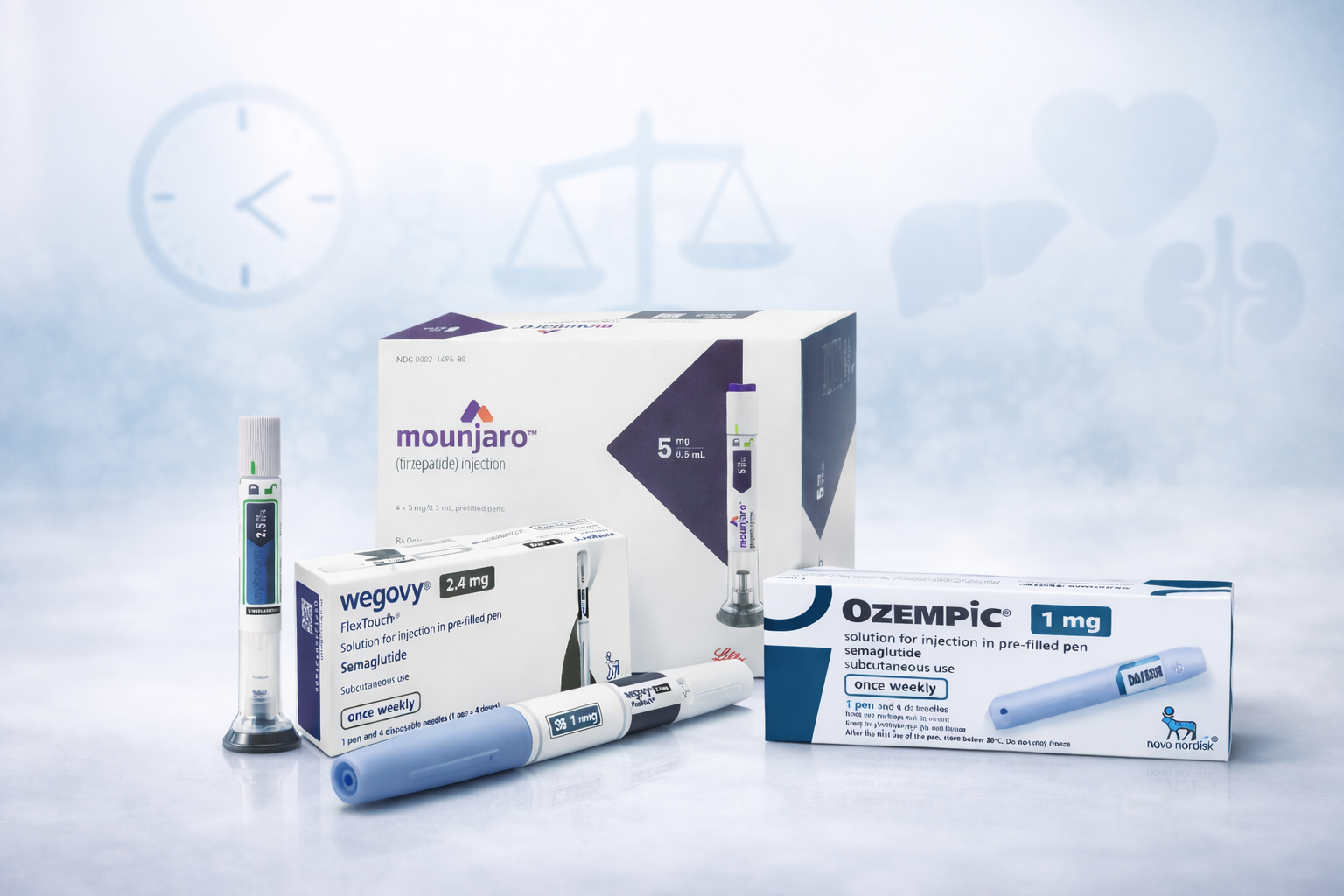
If you’re thinking of using semaglutide (Wegovy) or tirzepatide (Mounjaro) to help aid your weight loss, you might be concerned about the long-term effects and the safety of these medications.
Semaglutide and tirzepatide help adults with a higher body mass index (BMI) or with obesity related health conditions lose weight by reducing appetite. They’re prescription-only and should be used as part of a comprehensive lifestyle plan.
While these weight loss injections are considered safe when prescribed by a medical professional and they’re both approved by the Medicines and Healthcare products Regulatory Agency (MHRA), they’re relatively new. So, if you want to know more about the long-term effects of semaglutide and tirzepatide, you’re not alone.
Here, we’ll take a look at what the semaglutide and tirzepatide research says to help you decide whether they could be a good fit for you and your weight loss journey.
What are semaglutide and tirzepatide used for?
Both semaglutide and tirzepatide are GLP-1 medications. Also known as GLP-1 receptor agonists, they imitate the hormone GLP-1, which our intestine produces.
People with diabetes use these medications to increase insulin and reduce blood sugar, and they’re now often used as weight loss treatments for adults managing obesity related health conditions, too. This is because they help people feel full for longer and reduce food cravings, in turn helping them lose weight.
They’re slightly different to each other. Semaglutide activates GLP-1 receptors alone, whereas tirzepatide activates both GLP-1 and GIP. Studies show that both are effective in aiding weight loss, but tirzepatide may be more effective than semaglutide in higher doses.
GLP-1 medications are given once a week as self-injections. They can be a good option for some people when they work with a qualified prescriber to formulate a suitable plan. It’s important to consider whether you might be able to make any lifestyle changes alongside the use of semaglutide or tirzepatide, too.
If you’re suitable, we can prescribe appropriate treatment at the Virtual Slimming Clinic. Submit a free online consultation today, or keep reading to find out more about the potential effects.
Potential side effects of semaglutide and tirzepatide
Though both semaglutide and tirzepatide are considered generally safe, some people may experience side effects. These can differ from person to person, but the following are among the most common mild side effects:
- Nausea and vomiting
- Diarrhoea
- Constipation
- Abdominal pain
- Decreased appetite
- Bloating
- Burping
- Indigestion, acid reflux or heartburn
- Dizziness and tiredness
These milder side effects, like nausea, might only last a few days or weeks before going away as your body gets used to the drug. To reduce the risk of side effects, you’ll start on the lowest dose and only increase it gradually if you need to.
What we know about the long-term GLP-1 effects
Because GLP-1 medications are relatively new, and particularly because they haven’t been used as weight loss drugs for very long, there are still things we don’t know about their tirzepatide and semaglutide safety.
Based on prior semaglutide and tirzepatide research, we know that GLP-1 medications can be safe and effective when prescribed by medical professionals. So far, clinical trials have shown consistent weight loss, as well as improved heart health, when used regularly for up to two years.
Some potential long-term side effects of semaglutide and tirzepatide have been observed in clinical trials, however. While they weren’t common, they are possible, and could require treatment for a long time. They include the following:
- Depression or thoughts of suicide
- Diabetic retinopathy complications
- Digestive issues
- Gallstones or gallbladder inflammation
- Issues with anaesthesia
- Kidney issues
- Pancreatitis
- Thyroid cancer
However, it’s important to remember that while no medical treatment is entirely risk-free, these more serious long-term GLP-1 side effects are rare.
How to use semaglutide and tirzepatide safely
GLP-1 medications are prescription-only, so they need to be prescribed by a medical professional who can assess whether they’re safe for you. To reduce the risks associated with taking them, it’s important to follow the plan and listen to the advice you’re given.
If you’re prescribed semaglutide or tirzepatide, you’ll start on the lowest dose to help your body adjust and reduce the risk of potential side effects. It’s important not to increase to the next dose if you feel like the current dose is working. Make sure you only take your medication once a week, too.
Alongside your GLP-1 usage, it’s recommended to eat a balanced diet, limit alcohol consumption, and ensure you’re drinking plenty of water. If you’re able to do so, formulating an exercise routine will also help you stay healthy.
At The Virtual Slimming Clinic, our clinical team will work with you to formulate a plan and regularly review your progress so you’ll keep seeing results safely. Visit our blog to find out more about GLP-1 medications, and start your free online assessment today to find out how we can help you on your weight loss journey for better health.
Frequently Asked Questions
Is semaglutide safe for long-term use?
Both semaglutide and tirzepatide are considered safe to use long-term, with the benefits of sustained treatment usually outweighing the risks. At The Virtual Slimming Clinic, we will conduct a thorough assessment to ensure that long-term use is right for you.
What are the main tirzepatide risks?
The main risks of tirzepatide and semaglutide use are mild side effects. They include nausea, vomiting, diarrhoea and constipation. Often, these side effects will lessen over time as your body gets used to the medication.
Can you stop using semaglutide after losing weight?
Because obesity is considered to be a long-term chronic health condition, if you stop taking semaglutide or tirzepatide, you may gradually start to regain weight as your appetite returns. However, chronic use of your medication alongside lifestyle changes will help patients maintain a healthy weight.
How long will I need to take GLP-1 medications for?
Semaglutide and tirzepatide are designed as long-term treatments to be used alongside lifestyle adjustments, but the length of time they’re used for can differ from person to person.
They’re approved for long-term use to help adults lose weight, so they can be taken for as long as they benefit you, as long as you’re happy to manage any side effects.