




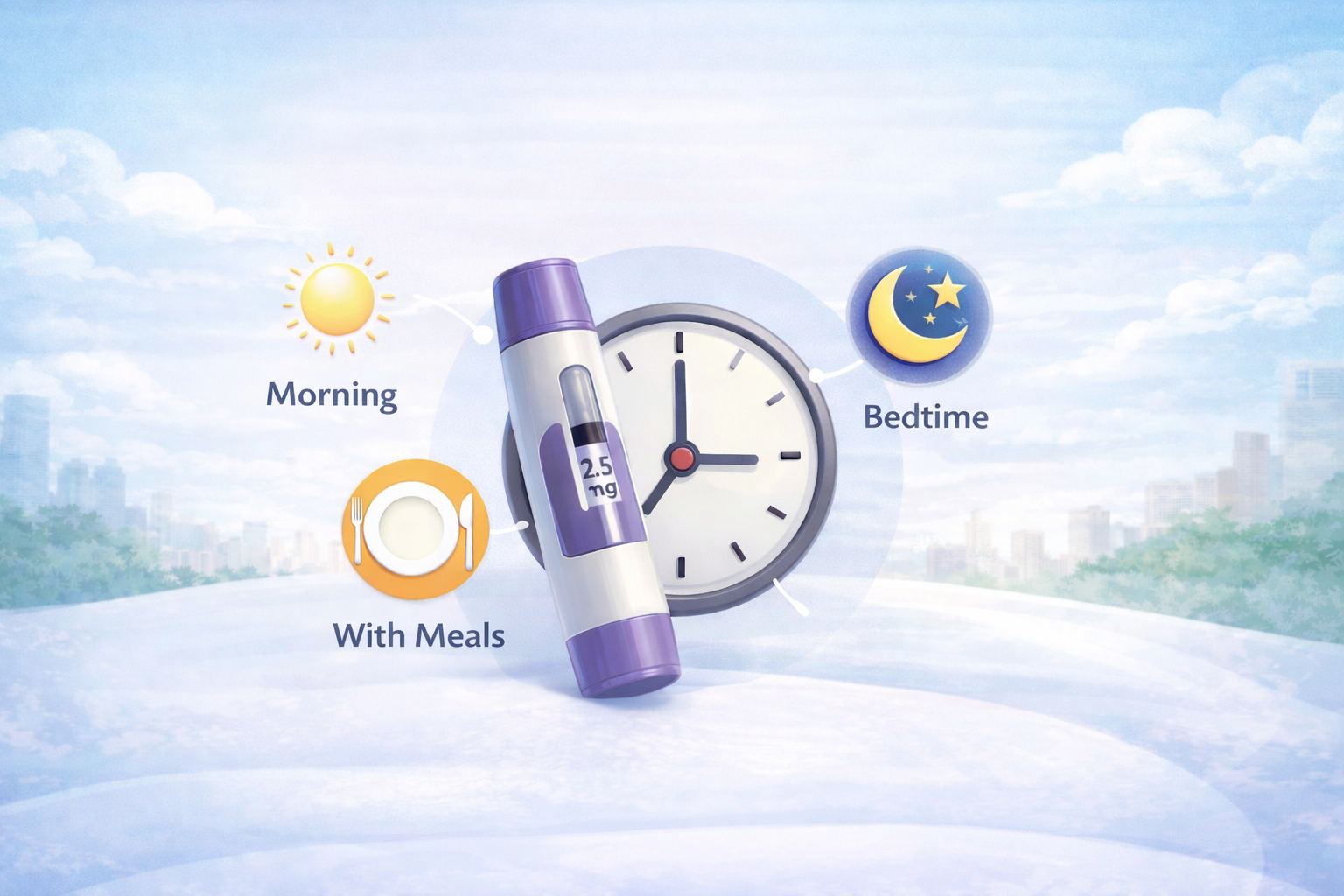
Quick answer: The best time of day to take Mounjaro for weight loss depends on your routine and side-effect tolerance, but consistency matters more than the exact hour, as Mounjaro works continuously over a full 7-day cycle.
Understanding Mounjaro
Mounjaro (tirzepatide) is a once-weekly injectable medication originally developed to support blood sugar control in people with type 2 diabetes, but it has quickly become recognised for its powerful effects on appetite regulation and weight loss. Unlike older medications, such as Ozempic and Wegovy, that target a single pathway, Mounjaro works by activating two hormone receptors, GLP-1 and GIP, which play a critical role in hunger signalling, insulin response and how quickly food leaves the stomach.
From a weight-loss perspective, Mounjaro reduces appetite, increases feelings of fullness and helps regulate blood sugar levels that would otherwise trigger cravings. This dual-hormone action is why many people report stronger appetite suppression and more consistent results compared to earlier GLP-1 medications. The blood sugar regulation effects are also why it’s so often prescribed for type 2 diabetes.
Importantly, Mounjaro is not a fast-acting medication in the traditional sense. It’s about consistency, not achieving some sort of overnight cure. Once injected, it is slowly absorbed and remains active in the body for approximately seven days. This extended duration is why the medication is prescribed weekly rather than daily, and why the exact time of day you inject is less about immediate effect and more about comfort, consistency and side-effect management.
However, while Mounjaro works continuously in the background, with daily timing not getting in the way of efficacy, timing can still influence how you feel during the first 24–48 hours after your dose. Nausea, fatigue, appetite changes and digestive symptoms often peak shortly after injection, which is why choosing the right time of day can make a noticeable difference to your day-to-day experience.
How timing impacts Mounjaro’s effectiveness and absorption
The first and most important point is that, from a clinical standpoint, Mounjaro’s effectiveness is not significantly affected by the time of day it is taken. The medication does not behave like a stimulant or short-acting appetite suppressant that “wears off” within hours. Instead, it builds a steady concentration in the bloodstream, delivering consistent appetite regulation across the entire week.
That said, timing can affect:
- Perceived appetite suppression
- Side-effect intensity
- Energy levels
- Daily routine disruption
- Mental health experience
For example, someone who experiences nausea shortly after injection may prefer to take Mounjaro in the evening so they can sleep through the worst of it, whereas others might want to get it out of the way. Another person may feel mild fatigue and choose morning dosing so symptoms fade by bedtime, or at night to take that tiredness into bed.
It’s also worth noting that digestive side effects are often influenced by meal timing (and of course, food choices), not just injection timing. Injecting on an empty stomach versus after eating can change how nausea or bloating feels, even though absorption and desired medicinal effects remain consistent.
Ultimately, Mounjaro will work at any hour, but choosing a time that aligns with your lifestyle and tolerance for side effects can significantly improve adherence and long-term success.
What time of day is best to take Mounjaro
There is no universally “correct” time to take Mounjaro, but there are some fairly common patterns that tend to work better depending on individual preferences, work schedules and side-effect sensitivity.
Morning dosing
Morning dosing appeals to people who like structure and visibility, much like any other supplement or drug-taking routine. Taking Mounjaro early in the day helps some people remember their schedule and monitor how their body reacts, especially when starting or increasing doses.
Some users report that morning injections help curb appetite earlier, reducing breakfast portions and preventing mid-morning snacking. For people who struggle with daytime grazing, this can feel like an immediate behavioural win.
However, morning dosing can be challenging for those prone to nausea, particularly if they inject on an empty stomach, which is commonplace for early-day injections. In some cases, fatigue may also be more noticeable during the day, which can interfere with work or exercise.
Evening dosing
Evening dosing is often favoured by people who experience stronger side effects, as it can help them sleep through the worst of it. Injecting at night allows nausea or stomach discomfort to occur during rest, making it feel far less disruptive.
This approach can also suit people with unpredictable schedules or those who don’t want appetite suppression interfering with daytime meals. Weight loss medications aren’t all about getting in the way of your mealtimes, as consistent, healthy meals are still essential to improving your relationship with weight. Evening dosing may slightly delay appetite suppression until the following morning, which is not a downside for everyone.
The main drawback is that early side effects can be harder to monitor, and a small number of users report waking with nausea the next day.
Consistency is crucial
Regardless of whether you choose morning or evening, consistency matters more than precision when it comes to your weekly medications. Mounjaro should be taken on the same day each week, at roughly the same time, to maintain stable hormone levels and predictable appetite control. It’s also wise to inject in similar but rotating sites on the body to avoid unnecessary discomfort.
Below is a simplified comparison of timing options:
| Timing | Pros | Cons | Best for |
| Morning dose | Easier to monitor side effects; appetite control earlier in the day; fits routines | Nausea may affect breakfast; possible mid-day fatigue | People who want early appetite suppression |
| Evening dose | Nausea often slept through; less daytime disruption | Harder to notice early side effects; possible morning nausea | People sensitive to GI symptoms |
| Any time (flexible) | Works over 7 days; simpler long-term adherence | Requires discipline and consistency | Anyone prioritising routine |
Best time of day to take Mounjaro for weight loss
When weight loss is the primary goal, timing should support sustainable eating habits, not just short-term appetite suppression. Remember, you’re making long-term lifestyle changes, not putting a bandage on the situation.
Aligning with meals and daily routine
If you tend to overeat in the mornings or struggle with daytime snacking, a morning dose may feel more effective psychologically. Appetite suppression earlier in the day can reduce overall calorie intake without conscious restriction.
Conversely, if late-night eating is your biggest challenge, evening dosing may help reduce cravings during your most vulnerable hours. Think about your ‘problem times’ in the past and base your routine around this.
Effects on energy and activity levels
Some people experience mild fatigue after injection, particularly during dose increases and titration. If exercise is part of your routine, which it definitely should be during your treatment, consider whether injection timing could interfere with workouts.
Below is a detailed timing breakdown focused specifically on weight-loss outcomes:
| Timing | Weight-loss benefits | Potential drawbacks | Best for |
| Morning (before breakfast) | Strong early appetite suppression; reduced snacking | Nausea on an empty stomach; fatigue | Early overeaters |
| Morning (with breakfast) | Appetite control with fewer GI symptoms | Slightly milder suppression | Sensitive users |
| Afternoon | Appetite reduction peaks mid-day | Possible energy dip | Lunch grazers |
| Evening (with dinner) | Reduces late-night hunger | Mild morning nausea | Night snackers |
| Evening (after dinner) | Nausea often slept through | Delayed appetite suppression | Busy schedules |
What to do if you miss a dose?
If you miss a dose of Mounjaro, the general guidance is to take it as soon as you remember, as long as that falls within four days of your scheduled injection. If more than four days have passed, skip the missed dose and resume your normal schedule.
Do not double doses or attempt to “catch up,” as this can significantly increase side-effect risk without improving results. It’s not worth the risk.
Side effects related to timing
While timing doesn’t change how Mounjaro works pharmacologically, it can influence how side effects feel, which is why it’s vital to figure out what your personal preferences actually are.
Nausea
Nausea is the most common side effect of most weight loss medications and often peaks within the first 24–48 hours after injection. Evening dosing can reduce how disruptive this feels.
Vomiting
Vomiting is less common than nausea but is still most likely during early dose escalation. Injecting after a light meal rather than on an empty stomach may help, especially if you’re particularly sensitive.
Diarrhoea
Digestive changes often stabilise over time, but timing injections away from workdays may be helpful during the early weeks.
Fatigue
Fatigue is usually temporary as people get used to their treatment, but it can still influence whether morning or evening dosing feels better for you.
How to choose the best time to take Mounjaro
Consider your daily routine
Choose a time that fits naturally into your week, not one that requires constant reminders. That’s why early morning or later at night are both popular.
Monitor side effects
Track how you feel after each dose. Adjust timing if side effects consistently interfere with daily life or sleep schedule.
Align with meals
If nausea is an issue when you take Mounjaro, injecting after eating can be gentler on the stomach.
Stick to a consistent day each week
Consistency is one of the most important things when helping your body to adapt and reduce unpredictable side effects.
Consult your healthcare provider
Always discuss timing changes or persistent side effects with your clinician.
Conclusion
There is no single “best” time of day to take Mounjaro for weight loss, but there is a best time for you. Morning dosing may enhance early appetite control, while evening dosing can minimise side-effect disruption. Ultimately, consistency, comfort, and long-term adherence matter far more than the exact hour.
Are you interested in learning more about weight loss and weight loss treatments? Visit The Virtual Slimming Clinic today. We offer a range of free resources like this, along with a team of professionals to guide you through prescription options. Come to us now to start your journey towards a healthier lifestyle, the right way.
Frequently Asked Questions
Should I take Mounjaro in the morning or at night?
Either is effective. Choose based on side-effect tolerance and routine.
Can I take Mounjaro with meals or on an empty stomach?
Both are acceptable, but taking it with food may reduce nausea.
How often should I take Mounjaro?
Once weekly, on the same day each week.
What happens if I take Mounjaro at different times each week?
Inconsistent timing may increase side effects, but won’t stop the medication from working.
How long does it take to notice weight-loss effects?
Many people notice changes in appetite within 1–2 weeks, with weight loss becoming more apparent over several months.